
She couldn’t remember the last time she felt whole—her heart pined for the brushstrokes that once brought solace. “It’s been way too long,” she thought, the echo of her inner turmoil louder than any words. Each day pressed her further from the clarity of her art. After a draining day racing from obligation to obligation, she collapsed onto her bed, only to catch the unfinished painting’s silent gaze from across the room. Its blank, expectant canvas haunted her, but her body refused to comply. She felt trapped—adrift in her own mind, desperate for release yet incapable of conjuring the colors that used to spill so freely from her soul.
Days blurred together. The air in her apartment grew thick, as if darkness itself seeped from her pores. Something intangible gnawed at her resolve, growing heavier with each passing hour. That night, sleep became her adversary. Shadows twisted across her dreams, transforming the gentle ocean she once found peace in into something menacing. She knelt in the surf, choking down mouthfuls of tar-black sludge dredged from the sea. The taste was bitter—alien—but she couldn’t stop, even as she gagged and clawed at her throat. Jerking awake, she found herself drenched in cold sweat. There, tangled in her sheets, was a claw. Its gnarled fingers clung to a thick tuft of coarse black hair, slick and wet. She recoiled, heart pounding. “Where in the hell did you come from?” she whispered, her voice barely audible.
Unable to sleep, she wandered to the kitchen, her mind foggy. The painting called to her, but the urge to create was drowned out by a more primal fear. When night fell again, the dreams returned with a vengeance. The faceless, tarlike beast slithered through her subconscious, trailing matted hair and the stench of salt and decay. Every time she turned, it loomed closer—its presence more real, more oppressive. She awoke gasping, yet inescapably tethered to the nightmare.
The nightmare deepened the following night. Now, a sickly child clung to her hand as they wandered the halls of a decrepit hospital, where suffering was everywhere. The child coughed, feverish, eyes fever-bright. Shadowy nurses with warped faces drifted between beds, their limbs too long, their words unintelligible. No doctors came. Out the windows, the world fractured—volcanoes erupted, the ground split, and chaos spilled in. The tar creature watched from a corner, silent but ever-present, smiling with a mouth that didn’t exist.
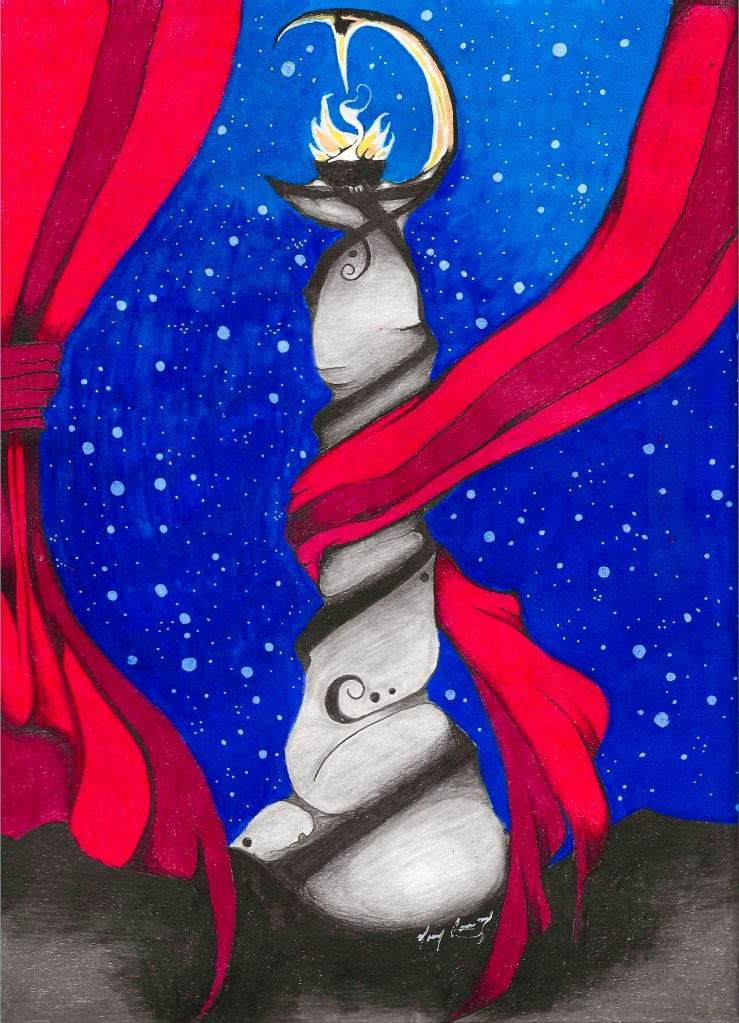
When daylight finally arrived, she was hollowed out, her energy spent. Yet something inside snapped—an urgent need to fight back. “Maybe I’ll feel better. Maybe I won’t,” she murmured, clutching her paintbrush. “But I need to set aside time, even if I’m too tired. I need to feel again. My soul must speak now.” Hours slipped away as she painted with a furious desperation. With each stroke, the shadows shrank back, and her exhaustion faded. When at last she finished, a weight lifted from her chest. Exhilaration coursed through her veins. For the first time in weeks, she felt whole—like a survivor clawing her way from the abyss.
That night, sleep brought her mercy. She dreamed of a lighthouse standing sentinel by a crystal-clear sea. The child sat on a sun-warmed rock, smiling softly at the horizon. “Thank you for saving me,” the little girl said, voice clear and true. Dawn’s light crept across the painting, and with it, a promise that the darkness had been held at bay—at least for now.
 Corvo Noire